

Woven Elastic Webbing
 John Howard Company carries a variety of woven elastic webbing for use in a wide range of products and industries including the US military.
Woven Elastics
Here’s a cleaner, expanded version you can drop onto the John Howard Company page:
Woven Elastic — Overview & Options
Woven elastic features distinct crosswise and lengthwise ribs that create a stable, non-rolling structure. Unlike many braided elastics, it does not narrow when stretched, holds its shape under load, and sews cleanly without gumming needles.
- Available Widths: Standard ¼” to 6″; custom widths on request.
- Stretch & Modulus: Tunable elongation and tension (modulus) to match your application—soft, medium, or firm profiles.
- Cover/Jacket Yarns: Offered with cotton, polyester, or nylon jackets for the desired hand, abrasion resistance, colorfastness, and UV/moisture performance.
- Elastic Core Options:
- Latex rubber for high snap and economy.
- Latex-free (spandex/elastane) for allergy-sensitive or regulated environments.
- Sewing & Fabrication: Stable under the presser foot; accepts box-X, bartack, zig-zag, and wide cover stitches; compatible with hot-knife or sealed cuts to minimize fray.
- Finishes & Add-Ons: Low-gloss tactical finishes, silicone micro-dot/stripe grip, printable surfaces, color matching, and NIR-considerate colorways (program dependent).
- Compliance & Provenance: Berry-compliant constructions and documentation (COC/COO, lot traceability) available for U.S. DoD programs.
- Typical Uses: Apparel waistbands, medical retention, tactical cummerbunds and mag retention, pack compression, helmet bungees, and industrial fixtures where controlled stretch and recovery are critical.
Need help dialing in performance? Provide your target width, working stretch %, required pull force (modulus), environment (UV, moisture, heat, chemicals), and any compliance needs—we’ll recommend a production-ready woven elastic and matching hardware.

Custom Cutting Services for Elastic and Webbing
We can custom cut elastic webbing and many of our other products to your specifications.
Call our friendly customer service staff for details and a quote.
888-564-6469
View Our Woven Elastic Products

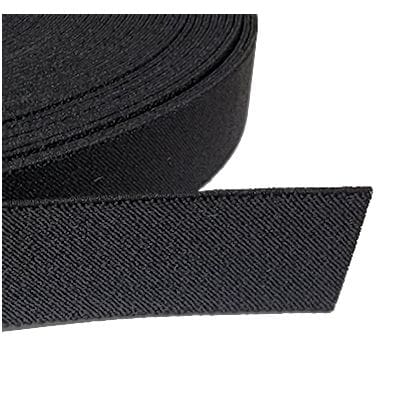
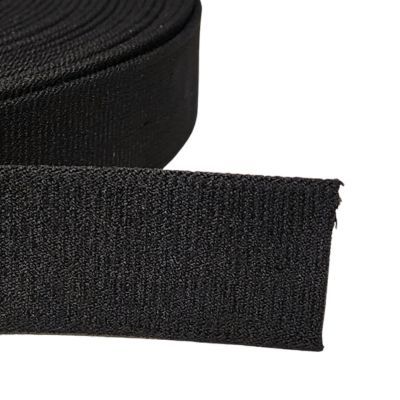
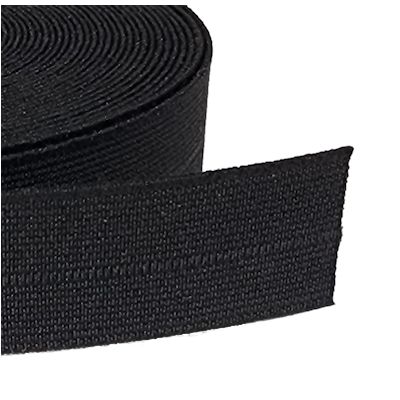
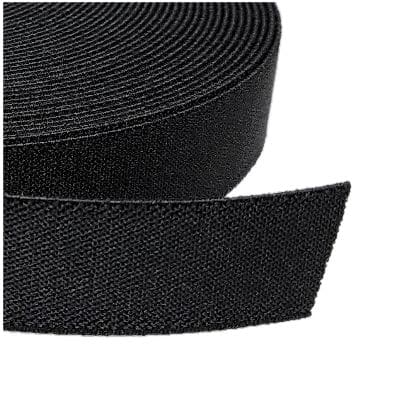

Quick Links to Our Elastic Products
- Mil-W-5664 Type II Woven Nylon Elastic – 1″, 2″, 3″, 4″, 5″
- Polyester Woven Elastic – 1″, 1-1/2″, 2″, 3″, 4″, 6″
- 3/4″ Polyester Braided Elastic
- 5/8″ Polyester Braided Elastic
- 1″ Heavy Polyester Braided Elastic
- Polyester Knitted Elastic – 1″ thru 14″
- 313 Centerfold Polyester Woven Elastic
- W-311 Polyester Woven Elastic
- 1365 Non Roll Polyester Woven Elastic
- LYC Ventilated Polyester Knitted Elastic – 2″ thru 8″
- L-Series Polyester Knitted Elastic
Here’s a polished FAQ you can drop onto the John Howard Company site. It covers fundamentals, performance, and military/compliance points for woven elastic webbing.
Woven Elastic Webbing — FAQ (John Howard Company)
Basics
What is woven elastic webbing?
A durable, stretchable textile strip made by weaving elastic yarns (e.g., rubber or spandex) together with strength yarns (often nylon or polyester). It provides controlled stretch with high recovery and dimensional stability.
How is woven elastic different from knit or braided elastic?
- Woven: Highest stability and strength; resists rolling/twisting; best for load-bearing applications.
- Knit: Softer hand, more breathable; good for apparel and light duty.
- Braided: Thins/narrows as it stretches; economical but not ideal for repeated high loads.
Common materials?
Outer/strength yarns: nylon or polyester (sometimes cotton or aramids for niche uses).
Elastic core: spandex (elastane) or natural rubber. Polyester blends favor UV and moisture resistance; nylon offers excellent abrasion resistance.
Performance & Specs
What stretch should I expect?
Typical working elongation is 30–70% with strong recovery; some constructions can go higher. We can tailor modulus (force to stretch) for soft, medium, or firm tension profiles.
How do I choose nylon vs. polyester?
- Polyester: Better UV, moisture, and colorfastness; great for outdoor/field use.
- Nylon: Superior abrasion resistance and soft hand; preferred where comfort and wear resistance matter.
What widths and thicknesses are available?
Common widths range from 1/2″ to 4″; thickness varies by construction. Custom widths, gauges, and color matches are available.
How durable is it under cycling?
Quality woven elastics maintain recovery after thousands of stretch cycles. For mission-critical uses, ask for cycling and recovery data at your target load (e.g., 10–30 lb).
Military & Compliance
Is woven elastic webbing available in Berry-compliant (U.S.-made) versions?
Yes. John Howard Company supplies Berry-compliant elastic webbings and hardware upon request for U.S. DoD programs.
Do you support mil/tactical color requirements?
Yes. Coyote, Ranger Green, Black, Wolf Gray, and select camouflage-adjacent tones are available; NIR-considerate colorways may be offered subject to availability and program needs.
What military applications use woven elastic webbing?
- Load-bearing gear: cummerbunds, magazine/medical retention straps, helmet bungees.
- Garment & kit: adjustable waist/suspender systems, kneepad retention, gaiters.
- Packs & cases: compression straps, accessory retention, shock isolation.
- Field medical: tourniquet and pouch retention bands (per program specifications).
What documentation can you provide?
Certificates of Compliance, Country-of-Origin, test reports, and lot traceability are available for compliant programs. Let us know your contract and packaging requirements.
Customization
Can you tune tension or recovery?
Yes—by adjusting elastic content, pick density, and yarn selection, we can deliver soft, medium, or firm modulus and target recovery percentages.
Can you match a sample or legacy spec?
Send a cutting and target properties (width, thickness, stretch %, finish, color). We’ll develop a functionally equivalent or improved construction.
Are prints or silicone grippers available?
Options include heat-resistant finishes, low-gloss/low-IR sheen, anti-slip silicone micro-dots/stripes, and fray-resistant edges (depending on construction).
Handling, Sewing & Assembly
Best practices for cutting?
Use a hot knife or sealed cut to reduce fray. For rubber-core goods, keep temperatures controlled to avoid damaging elastics.
Recommended stitches and thread?
For load-bearing, use box-X, multiple bartacks, or wide zig-zag with bonded nylon or polyester thread (e.g., Tex 70–135) matched to your substrate. Always validate stitch density and pattern in your own pull tests.
Any storage tips?
Store cool and dry, away from UV and ozone sources. Avoid prolonged compression that could pre-stretch or set the elastic.
Testing & Quality
What tests are typical?
- Tensile strength & elongation (e.g., grab/strip methods)
- Cycle/recovery testing at use loads
- Abrasion & colorfastness (wet/dry, UV exposure)
- Flame/chemical resistance where required by end-use
Share your test protocol or acceptance criteria—we’ll align to it.
How is quality controlled?
Incoming yarn verification, in-process loom checks, and lot-based QC on width, thickness, elongation, recovery, and appearance. COAs available on request.
Ordering & Logistics
What are typical MOQs and lead times?
Stock items can ship quickly; custom colors/constructions carry MOQs and lead times driven by yarn dyeing and loom scheduling. Ask for current stock or a program forecast to lock in capacity.
Can you supply matching hardware?
Yes—John Howard Company also supplies buckles, slides, loops, hooks, and metal components to build complete assemblies with your elastic webbing.
Do you offer kitting or cut-to-length?
Yes—cut parts, heat-sealed ends, and sub-assemblies can reduce your in-house labor and variability.
Safety & Care
Is there latex in the elastic?
Some elastics use natural rubber; latex-free (spandex-based) options are available. Specify if you require latex-free for allergy or regulatory reasons.
Temperature and chemical exposure?
Polyester blends handle moisture and UV well; nylon handles abrasion. For fuel/solvent or high-heat environments, consult us for the right construction and finish.
Not sure which elastic is right?
Share your application, target width, working stretch %, load, environment, and color/compliance needs. John Howard Company will recommend a proven, production-ready woven elastic—and supply the Berry-compliant hardware to match.

